Skip to product information
1 of 2

U-ZEE Direct-Mill Glass Ceramic Blocks – 280 MPa, No Firing Required

Ready-to-mill dental glass ceramic blocks designed for fast single-unit CAD/CAM restorations without mandatory post-milling crystallization firing.Featuring 280 MPa flexural strength, HT and LT translucency options, 12 shades, and a streamlined Mill → Adjust → Polish → Finish workflow.

Regular price $69.00
Sale price $69.00 Regular price $79.00
Shipping calculated at checkout.
  • No Post-Milling Crystallization Required
  • 280 MPa Flexural Strength
  • HT & LT Translucency Options
  • 12 Shade Options
  • Lab support before ordering
  • Fast Mill → Polish → Finish Workflow

OnePro Dental U-ZEE Direct-Mill Glass Ceramic Blocks are ready-to-mill restorative materials designed for professional dental laboratories and compatible with chairside CAD/CAM workflows requiring faster production without mandatory post-milling crystallization firing.

With a flexural strength of 280 MPa, U-ZEE provides a practical balance between esthetic performance, machinability, and workflow efficiency for appropriate single-unit restorations such as crowns, veneers, inlays, and onlays.

The material is available in HT and LT translucency options and 12 shades, allowing laboratories to select the appropriate optical characteristics according to the preparation color, restoration thickness, and desired final appearance.

After compatible wet milling, the restoration can proceed directly to adjustment, polishing, and final inspection. No mandatory crystallization firing is required for the standard direct-mill workflow, helping reduce furnace dependency and turnaround time.

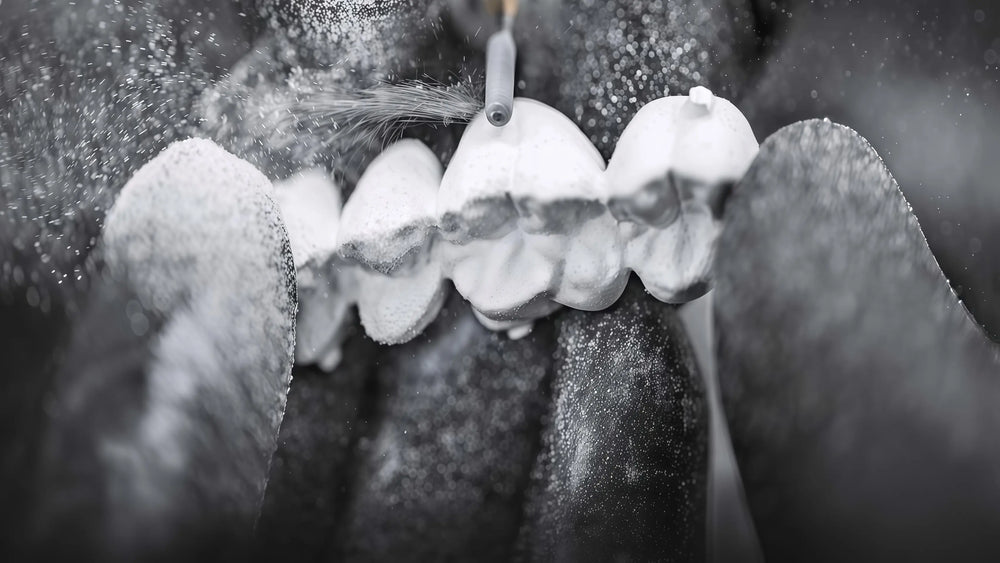
U-ZEE Direct-Mill Glass Ceramic CAD/CAM workflow showing milling, polishing and final dental restoration process

Direct-Mill Glass Ceramic for Fast CAD/CAM Restorations

A simplified glass-ceramic workflow designed to move directly from milling to adjustment, polishing, and final inspection.

OnePro Dental U-ZEE Direct-Mill Glass Ceramic Blocks are developed for dental laboratories and compatible chairside users who want to simplify the production of esthetic single-unit restorations.

Unlike conventional lithium disilicate CAD/CAM blocks that require a post-milling crystallization cycle, U-ZEE is supplied in a ready-to-mill material state for a streamlined direct-mill workflow.

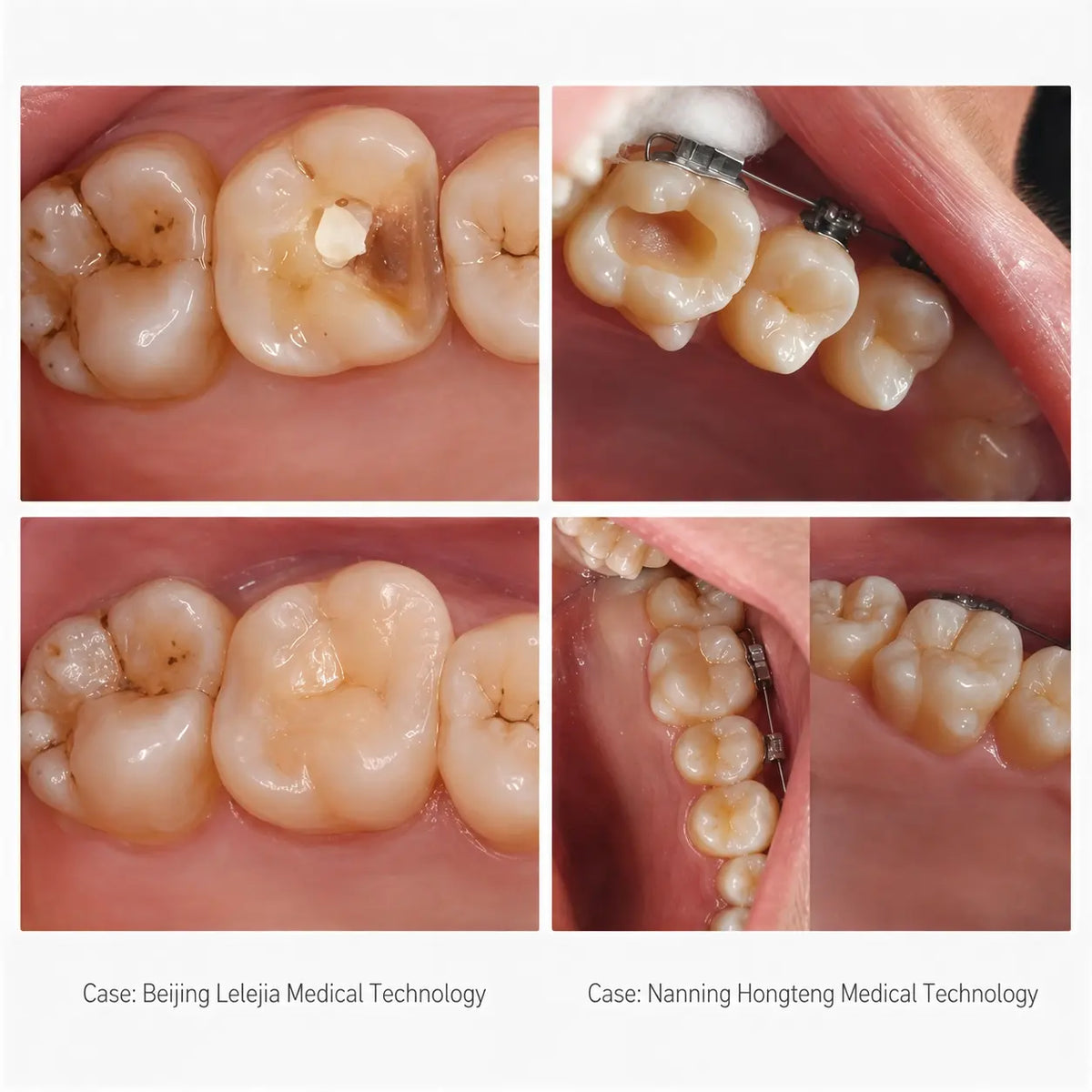
After compatible direct-mill workflow.

After compatible milling, the restoration can proceed to careful adjustment, surface finishing, polishing, and final inspection without a mandatory crystallization firing step.

With 280 MPa flexural strength, HT and LT translucency options, 12 shades, and a standard C14 block format, U-ZEE supports fast production of appropriate crowns, veneers, inlays, onlays, and other selected single-unit restorations.

Why Dental Labs Choose U-ZEE Direct-Mill

A practical combination of workflow speed, esthetic flexibility, reliable machinability, and simplified post-milling processing.

  • No Mandatory Crystallization Firing

    U-ZEE eliminates the mandatory post-milling crystallization step required by conventional lithium disilicate CAD/CAM blocks, helping reduce furnace dependency and production time.

  • Fast-Turnaround Workflow

    The streamlined Mill → Adjust → Polish → Finish process supports urgent single-unit cases, same-day requests, and laboratories where turnaround efficiency is important.

  • 280 MPa Flexural Strength

    The material provides 280 MPa flexural strength for appropriate single-unit restorative workflows with moderate functional requirements.

  • HT, LT & 12 Shades

    Choose between High Translucency and Low Translucency options across 12 shades to support different optical, masking, and esthetic.

1 of 4

No-Firing Workflow Comparison

U-ZEE Direct-Mill reduces the number of post-milling steps required for appropriate glass-ceramic restorations.

  • U-ZEE Direct-Mill Workflow

    1. Complete the CAD design
    2. Wet mill the restoration
    3. Remove the restoration from the block
    4. Adjust and finish the surfaces
    5. Polish to the required surface quality
    6. Complete final inspection

    No mandatory post-milling crystallization firing is required for the standard direct-mill workflow.

  • Conventional Lithium Disilicate Workflow

    1. Complete the CAD design
    2. Mill the pre-crystallized restoration
    3. Complete preliminary finishing
    4. Run the crystallization program
    5. Characterize or glaze when required
    6. Complete final polishing and inspection
1 of 2

HT vs. LT: Choose the Right Translucency

Select translucency according to the preparation color, restoration thickness, masking requirements, and desired optical result.

  • HT – High Translucency

    HT provides greater light transmission and is suitable for cases where a more translucent optical effect is preferred.

    Typical considerations:

    • Greater light transmission
    • Natural optical depth
    • Esthetic-focused restorations
    • Selected veneers, inlays, onlays, and crowns
    • Cases with a favorable underlying preparation color
  • LT – Low Translucency

    LT provides lower light transmission than HT and gives the laboratory greater control over the influence of the underlying preparation color.

    Typical considerations:

    • Greater masking capability than HT
    • More controlled substrate influence
    • Versatile crown workflows
    • Restorations requiring additional opacity
    • Cases where shade control is more important
1 of 2
Direct-mill lithium disilicate glass ceramic block with finished dental restorations for crowns, veneers, inlays, and CAD/CAM workflows

Recommended Applications

Designed for appropriately selected single-unit restorations where esthetics, simplified processing, and fast turnaround are important.

U-ZEE Direct-Mill Glass Ceramic can be considered for the following appropriate restorative workflows:

  • Anterior single crowns
  • Selected posterior single crowns
  • Veneers
  • Inlays
  • Onlays
  • Partial-coverage restorations
  • Urgent single-unit cases
  • Fast-turnaround laboratory restorations
  • Compatible chairside CAD/CAM workflows

The material is particularly suitable for appropriately designed single-unit restorations with moderate functional requirements.

12 Shades with HT & LT Translucency

Select the shade and translucency according to the preparation, restoration thickness, and desired final esthetic result.

Shade Group Available Shades
Bleach Shades BL1, BL2, BL3, BL4
A Shades A1, A2, A3, A3.5
B Shades B1, B2
C Shades C1, C2

Note

Final restoration appearance depends on the selected block shade, translucency, restoration thickness, preparation color, milling quality, surface adjustment, and polishing or characterization workflow.

Confirm the required shade, translucency, C14 holder compatibility, and package quantity before order

Technical Specifications

Parameter Specification
Product Type Direct-Mill Dental Glass Ceramic Block
Product Series U-ZEE Direct-Mill
Material Dental Glass Ceramic
Flexural Strength 280 MPa
Translucency Options HT / LT
Shade Options 12
Available Shades BL1–BL4, A1–A3.5, B1–B2, C1–C2
Block Format C14
Block Size 18 × 13 × 15 mm
Packaging 5 Blocks per Box
Density 2.46–2.52 g/cm³
Vickers Hardness Approx. 600 HV
Elastic Modulus 50 ± 10 GPa
Fracture Toughness 2.5–3.5 MPa·m1/2
Chemical Solubility <100 μg/cm²
Processing Method CAD/CAM Milling
Preferred Milling Method Wet Milling
Mandatory Post-Milling Crystallization Not Required
Primary Users Professional Dental Laboratories & Compatible Chairside CAD/CAM Workflows
Technical Documentation Available Upon Request

Technical Note

The values above are based on the current product specifications.

Actual processing results depend on correct case selection, restoration design, machine configuration, CAM strategy, tooling, cooling, adjustment, and polishing procedures.

Always follow the current product documentation and the applicable milling-machine, CAM-software, tool, and finishing-system recommendations.

CAD/CAM Compatibility & Wet Milling

Successful processing depends on C14 holder compatibility, glass-ceramic milling capability, suitable tooling, and a validated wet-milling strategy.

  • Confirm the C14 Holder

    Check that your milling system accepts the C14 block format and that the holder dimensions match the 18 × 13 × 15 mm block.

  • Confirm Glass-Ceramic Capability

    Use a dental CAD/CAM milling system designed or configured for processing glass ceramic materials.
    A machine that mills zirconia or PMMA is not automatically suitable for glass ceramic.

  • Use Suitable Wet-Milling Tools

    Wet milling is the preferred processing method for U-ZEE.
    Use sharp milling or grinding tools recommended for glass ceramic according to your machine and tool manufacturer's instructions.

  • Use a Validated CAM Strategy

    Toolpath, bur selection, cooling, spindle settings, feed rate, and milling mode vary between CAD/CAM systems.
    Follow the validated recommendations provided by your machine, CAM software, tooling, and material suppliers.

1 of 4
U-ZEE Direct-Mill Glass Ceramic block with CAD/CAM milling machine and finished anterior and posterior dental restorations

Recommended U-ZEE Milling & Polishing Workflow

  1. Select the Shade & Translucency
    Choose the appropriate shade and HT or LT translucency according to the preparation color, restoration thickness, and desired optical result.
  2. Confirm C14 Compatibility
    Verify that the milling machine supports the C14 block format and is configured for compatible glass-ceramic wet milling.
  3. Complete the CAD Design
    Design the restoration according to the intended indication, required material thickness, margins, contacts, occlusion, and applicable design guidelines.
  4. Wet Mill the Restoration
    Use suitable glass-ceramic tooling, adequate cooling, and a validated CAM strategy for the selected machine and block holder.
  5. Remove the Restoration
    Carefully separate the restoration from the block and remove the attachment area without damaging the margins or ceramic structure.
  6. Adjust & Smooth
    Complete only the necessary adjustments using suitable glass-ceramic finishing tools.
    Avoid excessive pressure or localized overheating during adjustment.
  7. Polish the Surface
    Progress through the applicable polishing sequence from preliminary smoothing to fine polishing until the required surface quality and gloss are achieved.
  8. Complete Final Inspection
    Check fit, margins, contacts, occlusion, surface quality, shade, gloss, and restoration integrity before completing the case.

Speed vs. Strength

U-ZEE is designed to prioritize workflow efficiency and simplified processing rather than maximum flexural strength.

  • Choose U-ZEE Direct-Mill When:

    • A fast-turnaround single-unit restoration is required
    • Removing the mandatory crystallization step is a priority
    • The restoration has moderate functional requirements
    • The C14 block format is suitable for the design
    • The laboratory has compatible glass-ceramic wet-milling equipment
    • Furnace capacity or processing time is limited
    • An urgent laboratory or compatible chairside workflow is planned
  • Consider a Higher-Strength Material When:

    • Higher flexural strength is required
    • The case involves high occlusal loading
    • Severe bruxism or parafunctional loading is present
    • A multi-unit or long-span restoration is planned
    • The restoration design requires greater mechanical support
    • The required indication is not supported by U-ZEE
    • A conventional 420 MPa lithium disilicate or suitable zirconia workflow is more appropriate
1 of 2

Which Glass Ceramic Workflow Is Right for Your Lab?

Choose the material according to your equipment, preferred processing method, restoration type, and production workflow.

Product Workflow Strength Positioning Core Advantage Typical Laboratory Use
Lithium Disilicate CAD/CAM Blocks Mill → Crystallize → Finish Approx. 420 MPa Traditional high-strength digital lithium disilicate workflow Esthetic crowns, veneers, inlays and onlays
Pressable Lithium Disilicate Ingots Pattern → Invest → Burnout → Press → Divest → Finish 470 MPa Lost-wax hot-press ceramic workflow Crowns, veneers, inlays, onlays and appropriate press-ceramic restorations
U-ZEE Direct-Mill Glass Ceramic Wet Mill → Adjust → Polish → Finish 280 MPa No mandatory post-milling crystallization Fast-turnaround appropriate single-unit restorations
U-ZEE Pro Dazzling Veneer Ceramic Mill → Finish Veneer-focused specification Thin and whitening veneer workflow Selected esthetic veneer applications

Recommendation

Choose U-ZEE Direct-Mill when workflow speed, simplified processing, and removal of the mandatory post-milling crystallization step are the primary requirements.

Choose conventional Lithium Disilicate CAD/CAM Blocks when higher strength and a traditional mill-and-crystallize workflow are preferred.

Choose Pressable Lithium Disilicate Ingots when the laboratory uses a lost-wax hot-press workflow.

Choose U-ZEE Pro Dazzling when the workflow is specifically focused on selected thin or whitening veneer cases.

What is U-ZEE Direct-Mill Glass Ceramic?

U-ZEE is a ready-to-mill dental glass ceramic designed for fast production of appropriate single-unit restorations without mandatory post-milling crystallization firing.

Does U-ZEE require crystallization or firing after milling?

No mandatory post-milling crystallization firing is required for the standard U-ZEE direct-mill workflow.

After compatible milling, the restoration proceeds to adjustment, polishing, and final inspection.

Optional characterization or glazing should follow the instructions of the compatible finishing system being used.

What is the flexural strength of U-ZEE?

The current product specification is 280 MPa flexural strength.

The material is intended for appropriately designed single-unit restorations with suitable functional requirements.

Which restorations can be made with U-ZEE?

Typical applications include appropriate anterior and selected posterior single crowns, veneers, inlays, onlays, and partial-coverage restorations.

Final indication should follow the applicable product documentation, restoration design, and professional clinical assessment.

Is U-ZEE suitable for posterior crowns?

U-ZEE may be considered for appropriately designed single posterior crowns with suitable occlusal conditions and moderate functional requirements.

For high-load cases, severe bruxism, or restorations requiring greater mechanical strength, consider conventional lithium disilicate or an appropriate zirconia material.

What is the difference between HT and LT?

HT provides greater light transmission and is preferred when a more translucent optical effect is required.

LT provides lower light transmission and greater control over the influence of the underlying preparation.

Selection should consider the preparation shade, restoration thickness, masking requirements, and desired final appearance.

Which shades are available?

U-ZEE is available in 12 shades:

BL1, BL2, BL3, BL4

A1, A2, A3, A3.5

B1, B2

C1, C2

Each shade is available in HT and LT translucency options.

Does U-ZEE require wet milling?

Wet milling is the preferred processing method for U-ZEE.

The exact milling mode, tooling, cooling, feed rate, and spindle settings should follow the recommendations of the milling machine, CAM software, tool, and material suppliers.

What is the difference between U-ZEE and conventional lithium disilicate blocks?

U-ZEE provides 280 MPa flexural strength and does not require mandatory post-milling crystallization in its standard direct-mill workflow.

Conventional OnePro Lithium Disilicate CAD/CAM Blocks provide approximately 420 MPa flexural strength and require a post-milling crystallization cycle.

U-ZEE prioritizes speed and workflow simplicity, while conventional lithium disilicate prioritizes higher mechanical performance.

Explore More Glass Ceramic Solutions

Compare direct-mill, crystallized, pressed, and veneer-focused ceramic workflows for your laboratory.

  • Lithium Disilicate CAD/CAM Blocks

    Approx. 420 MPa lithium disilicate blocks for a digital mill-and-crystallize restorative workflow.

  • Pressable Lithium Disilicate Ingots

    470 MPa lithium disilicate ingots for conventional and digitally assisted lost-wax hot-press workflows.

  • U-ZEE Pro Dazzling Veneer Ceramic

    A no-crystallization ceramic solution developed for selected thin and whitening veneer workflows.

  • Glass Ceramic Collection

    Compare all OnePro Dental glass ceramic solutions by restoration type, strength positioning, equipment, and processing workflow.

1 of 4

Need Help Confirming Whether U-ZEE Fits Your Workflow?

Tell us your milling machine brand and model, block-holder configuration, CAM software, restoration type, required shade, HT or LT translucency, quantity, and expected turnaround time.

Our team can help you confirm C14 compatibility, compare suitable glass ceramic options, review the recommended milling and polishing workflow, and provide available technical documentation before ordering.