Skip to product information
1 of 5

Dental Wax Discs 10–25mm | CAD/CAM Milling Wax

CAD/CAM dental wax discs for precise milling of crown, bridge, coping, framework, diagnostic wax-up, and casting patterns.

Regular price $5.90
Sale price $5.90 Regular price $7.90
Shipping calculated at checkout.
  • Secure PayPal checkout
  • Lab support before ordering
  • Worldwide shipping available

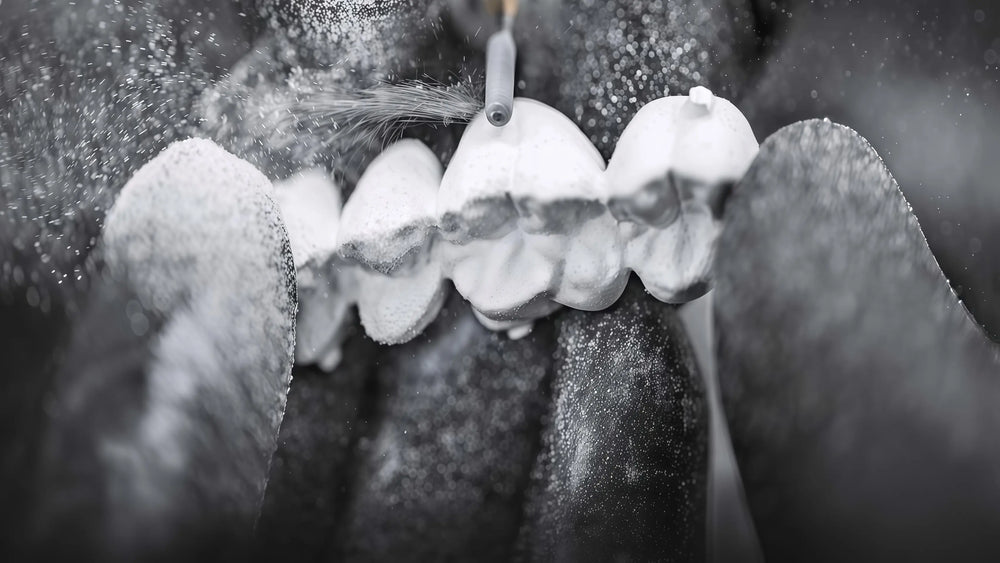
OnePro Dental Wax Discs are designed for CAD/CAM milling of crown and bridge patterns, copings, frameworks, diagnostic wax-ups, and selected casting or pressing workflows.

The dental milling wax provides smooth machining, stable pattern dimensions, clean margins, and easy manual finishing for efficient dental laboratory production.

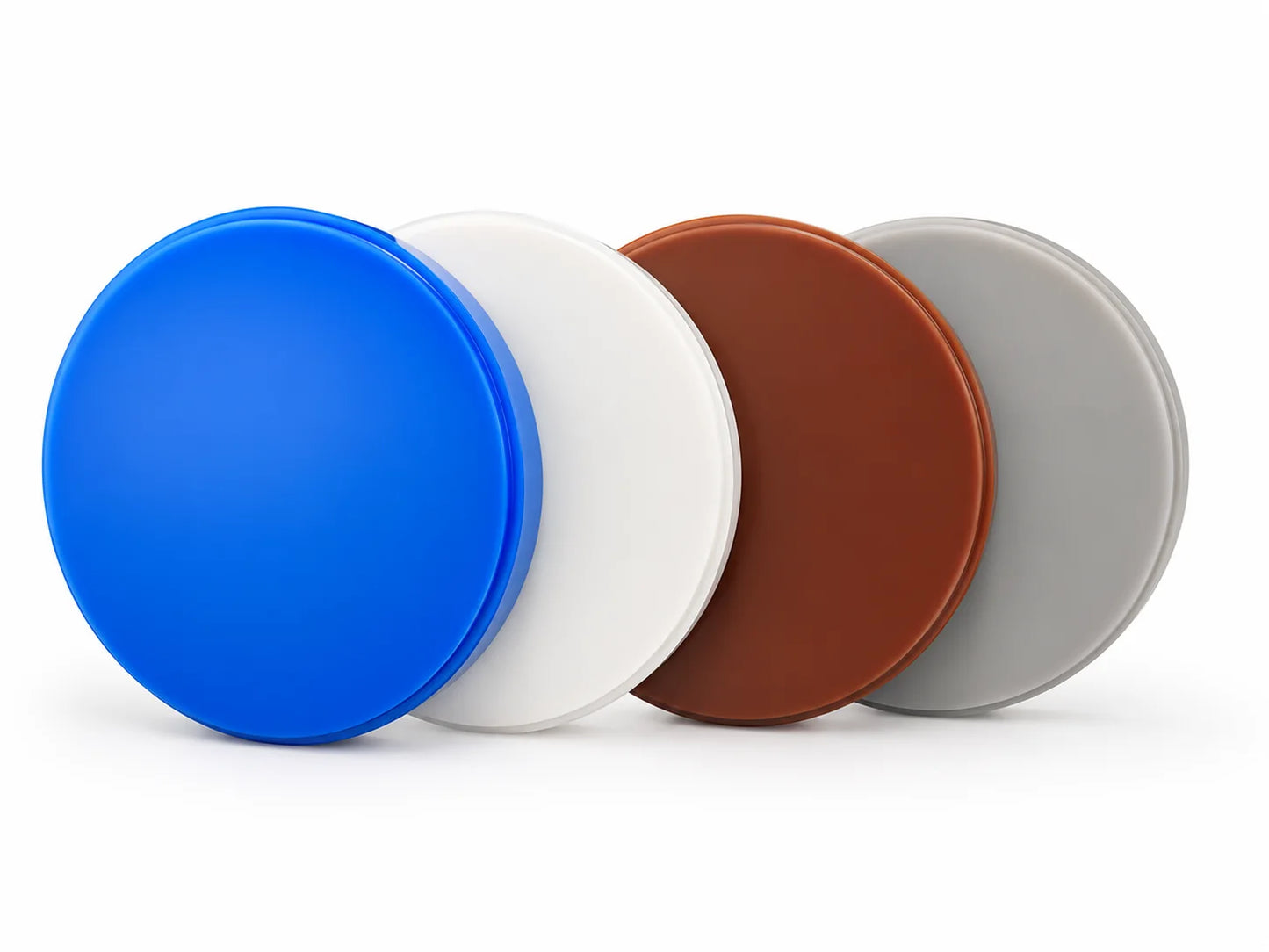
Available in four colors, eight thicknesses from 10mm to 25mm, and both 98mm Open System and 95mm Zirkonzahn formats.

Why Dental Labs Choose Our Wax Discs

Designed for smooth CAD/CAM milling, stable pattern accuracy, clean margins, and efficient wax pattern fabrication for casting, pressing, diagnostic wax-ups, and daily dental lab workflows.

  • Easy & Clean Milling

    Optimized wax consistency supports smooth CAD/CAM milling, clean margins, and reduced chipping during detailed pattern production.

  • Stable Pattern Accuracy

    Designed to maintain dimensional consistency during milling, handling, fitting, and preparation for casting workflows.

  • Smooth Surface Finish

    Produces smooth milled surfaces that require less manual refinement before spruing, investing, or trial fitting.

  • Multiple Colors & Thicknesses

    Available in four colors, eight thicknesses from 10mm to 25mm, and both 98mm Open System and 95mm Zirkonzahn formats.

1 of 4
Blue and white dental wax discs with milled removable framework patterns

Recommended Applications

OnePro Dental Wax Discs are designed for dental laboratories producing accurately milled wax patterns before casting, pressing, or final restoration fabrication.

The material is suitable for detailed CAD/CAM wax-ups where clean margins, stable dimensions, and efficient finishing are required.

  • Crown and bridge wax patterns
  • Copings and framework patterns
  • Diagnostic wax-ups
  • Implant-supported framework patterns
  • Full-contour casting patterns
  • Pressable restoration wax patterns

Technical Specifications

Parameter Value
Material Dental CAD/CAM Milling Wax
Available Systems 98mm Open System / 95mm Zirkonzahn
Available Colors Blue / White / Brown / Grey
Available Thicknesses 10mm, 12mm, 14mm, 16mm, 18mm, 20mm, 22mm, 25mm
Processing Method CAD/CAM Milling
Recommended Use Wax patterns, diagnostic wax-ups, casting workflows, and pressing workflows
Surface Characteristics Smooth milling surface with clean detail reproduction
Finishing Manual trimming and smoothing as required
Grey dental wax disc with milled removable partial denture framework pattern

Recommended Milling & Pattern Workflow

  1. Select the correct system, color, and thickness.
  2. Design the crown, bridge, coping, framework, or wax-up in CAD software.
  3. Position the restoration to minimize material waste and provide stable connector placement.
  4. Mill using burs and parameters suitable for dental wax.
  5. Remove the milled pattern carefully from the disc.
  6. Trim connectors and refine margins using suitable wax-finishing instruments.
  7. Inspect the pattern for surface quality, fit, margin accuracy, and deformation.
  8. Complete spruing, investing, pressing, or casting according to the selected laboratory workflow.

Wax Disc vs. PMMA Disc

Choose the appropriate CAD/CAM material based on whether the case requires a casting pattern, diagnostic wax-up, or temporary clinical restoration.

  • Wax Disc

    • Used primarily for milling patterns and wax-up
    • Suitable for casting and pressing workflows
    • Easy to trim, refine, and sprue
    • Not intended as a final temporary restoration
  • PMMA Disc

    • Used for temporary crowns, bridges, and try-ins
    • Suitable for provisional restorations
    • Designed for polishing and temporary clinical use
    • Not intended as a burnout casting pattern

What are dental wax discs used for?

Dental Wax Discs are used for CAD/CAM milling of crown and bridge patterns, copings, frameworks, diagnostic wax-ups, casting patterns, trial restorations, and other laboratory patterns before final fabrication.

Can wax discs be used for crowns and bridges?

Yes. Wax Discs can be used to mill crown and bridge patterns before casting or pressing. The milled wax pattern is not the final restoration and must be processed through the selected laboratory workflow.

Are these wax discs suitable for lost-wax casting?

They can be used for selected lost-wax casting workflows. Burnout performance depends on the investment material, furnace program, sprue design, pattern thickness, and laboratory procedure.

Dental laboratories should verify the complete casting protocol before routine production.

What is the difference between wax discs and PMMA discs?

Wax Discs are mainly used for patterns, wax-ups, casting, and pressing workflows.

PMMA Discs are mainly used for temporary crowns, bridges, try-ins, splints, denture bases, and provisional restorations. PMMA is not intended to replace dental wax in burnout casting workflows.

Which milling systems are compatible with these wax discs?

OnePro Dental Wax Discs are available in 98mm Open System and 95mm Zirkonzahn formats.

Please confirm your milling machine holder type, disc diameter, and required thickness before ordering.

Which thickness should I choose?

The suitable thickness depends on the restoration height, framework design, nesting strategy, and milling machine requirements.

Thinner discs are generally suitable for smaller patterns, while thicker discs provide more vertical space for larger bridges, frameworks, and complex designs.

What burs are recommended for milling dental wax?

Sharp burs designed for dental wax or soft CAD/CAM materials are recommended.

Worn or unsuitable burs may cause rough surfaces, material smearing, poor margins, or pattern deformation. Follow your milling machine and CAM software recommendations.

Does the wax leave residue after burnout?

Burnout performance depends on the material composition, investment system, furnace program, pattern design, sprue placement, and laboratory procedure.

Please contact us for available technical information before establishing your production protocol.

Does dental wax require sintering or crystallization?

No. Wax patterns do not require sintering or crystallization.

After milling, the pattern is trimmed, refined, inspected, and then processed through the selected casting, pressing, or laboratory fabrication workflow.

How many wax patterns can be milled from one disc?

The number depends on the disc thickness, pattern size, connector placement, restoration design, and nesting efficiency.

Dental laboratories should estimate yield according to the actual CAD design and milling strategy.

Explore Related CAD/CAM Materials

  • Dental Milling Burs

    Precision burs for smooth, accurate milling of dental wax, PMMA, zirconia, and other CAD/CAM materials.

  • Lithium Disilicate Ingots

    Pressable glass ceramic ingots for esthetic crowns, inlays, onlays, veneers, and wax-pattern workflows.

  • Monolayer PMMA

    Uniform-shade PMMA discs for temporary crowns, bridges, diagnostic try-ins, and cost-efficient provisional restorations.

  • Multilayer PMMA

    Five-layer gradient PMMA discs for esthetic temporary crowns, bridges, full-arch provisionals, and diagnostic try-ins.

1 of 4

Need Help Choosing the Right Wax Disc?

Tell us your milling machine, disc holder format, restoration type, required thickness, and intended casting or pressing workflow.

Our team will help you confirm the suitable Wax Disc specification for your dental laboratory and provide product, compatibility, and ordering support.