
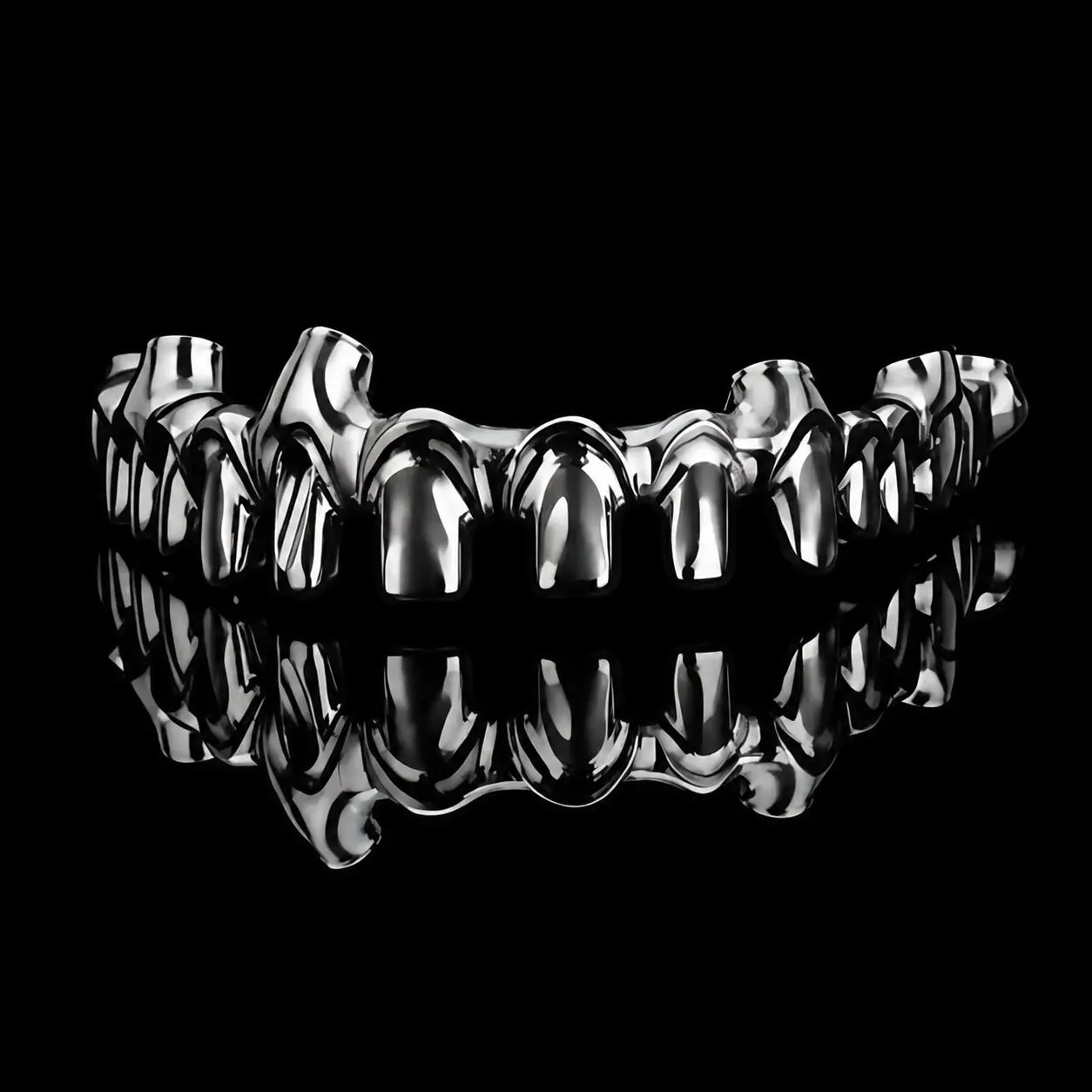
Titanium Alloy Disc (140×150 mm) | OnePro Dental
Couldn't load pickup availability
Share
Titanium Alloy Disc (140×150mm Large Format) – Maximum Strength for Full-Arch Restorations
The Titanium Alloy Discs (140×150mm) from OnePro Dental are engineered from Ti-6Al-4V Grade 5 (ELI) in a large format specifically designed for full-arch implant bridges, complex multi-unit frameworks, and large-scale restorations. With 895-1050 MPa tensile strength and 140×150mm diameter - significantly larger than standard 98mm discs - these discs enable one-piece fabrication of extensive frameworks without splicing or welding.
Available in 8 thickness options (10-25mm), these large-format discs provide optimal versatility for all full-arch and complex titanium prosthetic needs.
Key Features:
-
Large Format 140×150mm Diameter
Significantly larger than standard 98mm discs - enables one-piece full-arch frameworks without splicing. -
Ti-6Al-4V Grade 5 ELI Titanium Alloy
Medical-grade alloy with 895-1050 MPa tensile strength for maximum durability. -
Full-Arch Restoration Optimized
Specifically designed for All-on-4/6/8 implant bridges and large multi-unit frameworks. -
Superior Material Utilization
Large format reduces waste and allows efficient nesting of multiple components. -
One-Piece Framework Capability
Eliminates splicing and welding - improved strength, accuracy, and reduced fabrication time. -
Professional CAM System Compatible
Works with Roland DWX-52D/52DC, Wieland Zenotec, VHF K5/K6, Amann Girrbach Ceramill Motion 2. -
8 Thickness Options (10-25mm)
Wide range for various applications - from thin frameworks to thick full-arch structures. -
Dual-Phase Microstructure (α+β)
Superior mechanical properties and excellent machinability for complex geometries.
Recommended Indications:
The Titanium Alloy Discs (140×150mm) are specifically recommended for:
- Full-arch implant bridges (All-on-4/6/8) - one-piece frameworks for complete arch restorations
- Large multi-unit bridges (5+ units) - extended span bridges requiring maximum strength
- Complex implant frameworks - hybrid prosthetics and overdenture bars
- Full-arch screw-retained prosthetics - rigid frameworks for implant-supported restorations
- Large partial denture frameworks - extensive metal frameworks for removable prosthetics
- Multiple single-unit restorations - efficient production of multiple crowns or abutments from one disc
- Custom implant superstructures - patient-specific large-scale implant components
Understanding 140×150mm Large Format Advantages:
Why Choose 140×150mm Over Standard 98mm?
The 140×150mm large format provides critical advantages for full-arch and complex restorations:
Size Comparison:
- 140×150mm disc: Approximately 21,000 mm² surface area
- 98mm disc: Approximately 7,500 mm² surface area
- Size advantage: Nearly 3x larger working area
Key Advantages of Large Format:
- One-Piece Full-Arch Frameworks: Mill complete All-on-4/6/8 frameworks without splicing - improved strength and accuracy
- Eliminates Welding: No need to join multiple pieces - reduces fabrication time and potential weak points
- Superior Material Utilization: Nest multiple components efficiently - reduce waste and cost per restoration
- Improved Accuracy: Single-piece fabrication eliminates alignment errors from joining multiple segments
- Faster Production: Mill multiple single-unit restorations simultaneously or one large framework
- Cost Efficiency: Better material yield for large cases - lower cost per mm² of usable material
When to Choose 140×150mm vs 98mm
Choose 140×150mm Large Format. When:
- ✓ Fabricating full-arch implant bridges (All-on-4/6/8)
- ✓ Creating large multi-unit bridges (5+ units)
- ✓ Producing multiple single-unit restorations simultaneously
- ✓ Requiring one-piece frameworks without splicing
- ✓ Maximizing material utilization and reducing waste
- ✓ Your milling machine supports 140×150mm disc size
Choose 98mm Standard Format When:
- ✓ Fabricating single crowns or short-span bridges (3-4 units)
- ✓ Your milling machine only supports 98mm discs
- ✓ Working with smaller, routine restorations
- ✓ Lower initial material investment required
Equipment Compatibility & Requirements:
Compatible CAM Systems
The 140×150mm large format requires professional 5-axis milling systems with adequate working space:
Verified Compatible Systems:
- Roland: DWX-52D, DWX-52DC (with large disc holder)
- Wieland: Zenotec select ion, Zenotec select hybrid
- VHF: K5, K6 (with 150mm disc adapter)
- Amann Girrbach: Ceramill Motion 2 (with large format option)
- Sirona: inLab MC X5 (with appropriate holder)
- Yenadent: D50, D60 (large format capable)
Minimum Equipment Requirements:
- Working space: Minimum 160×160×60mm (X×Y×Z)
- Spindle power: Minimum 600W (800W+ recommended for Ti-6Al-4V)
- Spindle speed: 12,000-60,000 RPM variable
- Cooling system: High-flow wet milling capability (mandatory for titanium alloy)
- Disc holder: 140×150mm compatible clamping system
- Machine rigidity: Heavy-duty construction for titanium alloy milling
⚠️ Important: Verify your milling machine's compatibility with 140×150mm discs before purchasing. Not all 5-axis machines support this large format. Contact your machine manufacturer or OnePro technical support for confirmation.
Technical Specifications:
| Property | 140×150mm Ti-6Al-4V | 98mm Ti-6Al-4V |
|---|---|---|
| Disc Diameter | 140×150mm (Large Format) | 98mm (Standard) |
| Surface Area | ~21,000 mm² | ~7,500 mm² |
| Size Advantage | 2.8x larger | Standard |
| Composition | 90% Ti, 6% Al, 4% V | 90% Ti, 6% Al, 4% V |
| Tensile Strength | 895-1050 MPa | 895-1050 MPa |
| Available Thickness | 10-25mm (8 options) | 10-25mm (8 options) |
| Best For | Full-arch bridges, large frameworks | Single crowns, short bridges |
| One-Piece Full-Arch | Yes (All-on-4/6/8) | No (requires splicing) |
| Equipment Required | Large-format 5-axis CAM | Standard 5-axis CAM |
| Price Range | $45-$80 per disc | $32-$55 per disc |
| Standards | ISO 5832-3, ASTM F136 | ISO 5832-3, ASTM F136 |
Certifications & Standards:
OnePro Titanium Alloy Discs (140×150mm) meet or exceed international standards for medical-grade titanium alloys:
- ISO 5832-3: Implants for surgery - Metallic materials - Part 3: Wrought titanium 6-aluminum 4-vanadium alloy
- ASTM F136: Standard Specification for Wrought Titanium-6Aluminum-4Vanadium ELI (Extra Low Interstitial) Alloy
- FDA Approved: Cleared for dental and medical device applications
- CE Certified: Compliant with European medical device regulations
- ISO 13485: Manufactured under certified quality management system
CAD/CAM Milling & Processing Workflow for Large Format:
Step 1: CAD Design & Milling Preparation (30-45 minutes)
- Design full-arch framework or a large multi-unit bridge in CAD software (3Shape, Exocad, DWOS)
- Full-Arch Design Considerations:
- • Design complete arch in one piece - no segmentation needed with 140×150mm format
- • Verify adequate connector dimensions (minimum 16mm² for full-arch bridges)
- • Plan screw access channels for implant-supported restorations
- • Ensure framework thickness: minimum 0.6-0.8mm, recommended 0.8-1.2mm
- • Add passive fit compensation for full-arch frameworks
- Nesting Strategy:
- • Utilize large format efficiently - nest multiple components when possible
- • Plan milling orientation to minimize support structures
- • Verify all components fit within 140×150mm working area
- Export STL file with correct orientation and verify disc size compatibility
Step 2: Large Format Titanium Alloy Milling (60-180 minutes) - Extended Process
- Recommended Parameters for 140×150mm Discs:
- • Bur type: Premium carbide burs with TiAlN coating (titanium alloy-specific)
- • Bur size: 0.5-2.5mm diameter depending on detail level
- • Spindle speed: 12,000-25,000 RPM (lower for Ti-6Al-4V)
- • Feed rate: 0.5-1.2 mm/s (conservative for large-format milling)
- • Cooling: High-flow wet milling absolutely mandatory - large format generates significant heat
- • Milling strategy: Adaptive toolpaths with constant engagement
- Large Format Specific Considerations:
- • Extended milling time: Full-arch frameworks may require 2-3 hours of milling time
- • Disc clamping: Ensure secure, vibration-free mounting - critical for large discs
- • Coolant management: Monitor coolant flow continuously - large surface area requires abundant cooling
- • Tool wear monitoring: Check burs regularly during long milling sessions
- • Machine stability: Verify machine rigidity - large format milling generates higher forces
- Use only fresh, sharp burs designed specifically for titanium alloys
- Plan for tool changes during extended milling sessions
Step 3: Surface Treatment & Finishing (30-50 minutes)
- Mechanical Finishing:
- • Remove milling tabs and supports with diamond discs or carbide burs
- • Smooth all surfaces with titanium alloy-specific polishing burs
- • Use progressive grits: coarse → medium → fine → extra fine
- • Pay special attention to connector areas and screw access channels
- Surface Treatment Options:
- • Sandblasting: 50-110 micron Al₂O₃ at 2-4 bar for uniform surface texture
- • Polishing: High-gloss finish for supragingival surfaces using diamond paste
- • Passivation: Nitric acid treatment to enhance oxide layer (optional)
- Clean thoroughly with ultrasonic cleaner and steam - critical for large frameworks
Step 4: Quality Control & Delivery (20-30 minutes)
- Full-Arch Framework Verification:
- • Verify passive fit on master model or verification jig
- • Check all screw access channels for proper alignment and clearance
- • Measure framework thickness in critical stress-bearing areas
- • Inspect all connector areas for adequate dimensions and smooth finish
- • Verify no sharp edges, rough areas, or milling defects throughout framework
- • Test screw fit and torque (if applicable)
- Clean, sterilize if required, and package in a protective container
- Provide handling and installation instructions for large frameworks
⚠️ Critical Considerations for 140×150mm Large Format Milling: Large format titanium alloy milling is significantly more demanding than standard 98mm discs. The extended milling times (2-3 hours for full-arch frameworks), larger surface area, and higher material volume require robust equipment, abundant cooling, and careful process monitoring. Always verify your milling machine's compatibility with 140×150mm discs and ensure adequate spindle power (800W+ recommended) before attempting large-format titanium alloy milling.
Material Utilization & Cost Efficiency:
Yield Comparison: 140×150mm vs 98mm
From 140×150mm Disc (20mm thickness):
- Full-arch implant bridge: 1 complete framework (All-on-4/6/8)
- 5-unit bridge: 1-2 bridges
- Single crowns: 12-18 crowns (efficient nesting)
- Implant abutments: 25-35 abutments
- Material utilization: 70-85% (excellent for large cases)
From 98mm Disc (20mm thickness):
- Full-arch implant bridge: Not possible (requires splicing multiple discs)
- 3-unit bridge: 2-3 bridges
- Single crowns: 6-10 crowns
- Implant abutments: 15-20 abutments
- Material utilization: 60-75%
Cost-Benefit Analysis
| Factor | 140×150mm Large Format | 98mm Standard Format |
|---|---|---|
| Surface Area | ~21,000 mm² | ~7,500 mm² |
| Cost per mm² | $0.0031/mm² | $0.0064/mm² |
| Full-Arch Bridge | 1 disc (one-piece) | 2-3 discs (requires splicing) |
| Splicing/Welding | Not required | Required (adds time/cost) |
| Milling Time (Full-Arch) | 2-3 hours (one session) | 3-4 hours (multiple sessions + joining) |
| Material Waste | 15-30% (better nesting) | 25-40% |
| Best Value For | Full-arch, large cases, high volume | Single units, small cases |
Conclusion: For full-arch and large multi-unit cases, 140×150mm discs provide superior cost efficiency despite a higher initial price. The elimination of splicing/welding and better material utilization results in lower overall cost per restoration.
Designed for Dental Laboratories
OnePro Dental works directly with dental laboratories worldwide, providing reliable CAD/CAM materials that combine performance, consistency, and cost efficiency.
The Titanium Alloy Discs (140×150mm) are an excellent choice for labs specializing in full-arch implant restorations and large-scale frameworks.
Frequently Asked Questions (FAQ)
💎 Large Format Advantages & Applications
Q: What are the main advantages of 140×150mm over 98mm discs?
A: The 140×150mm large format provides critical advantages:
• One-piece full-arch frameworks: Mill complete All-on-4/6/8 bridges without splicing - improved strength and accuracy
• 2.8x larger surface area: ~21,000 mm² vs ~7,500 mm² for 98mm
• Better material utilization: 70-85% efficiency vs 60-75% for standard discs
• Eliminates welding: No joining required - reduces fabrication time and potential weak points
• Lower cost per mm²: $0.0031/mm² vs $0.0064/mm² for 98mm
• Multiple components: Mill 12-18 single crowns or 25-35 abutments from one disc
The large format is essential for full-arch implant restorations and provides better economics for high-volume production.
Q: Can I mill a complete All-on-4/6/8 framework from one 140×150mm disc?
A: Yes! This is the primary advantage of the 140×150mm large format. You can mill a complete full-arch implant bridge framework in one piece without any splicing or welding. This provides:
• Superior strength: No weak points from welded joints
• Better accuracy: Single-piece fabrication eliminates alignment errors
• Faster production: No time spent on joining and finishing welds
• Improved passive fit: One-piece design ensures better implant fit
With 98mm discs, you would need to mill 2-3 segments and weld them together, which compromises strength and accuracy.
Q: When should I choose 140×150mm instead of 98mm?
A: Choose 140×150mm large format when:
✓ Fabricating full-arch implant bridges (All-on-4/6/8)
✓ Creating large multi-unit bridges (5+ units)
✓ Producing multiple single-unit restorations simultaneously (12+ crowns)
✓ Requiring one-piece frameworks without splicing
✓ Maximizing material utilization for cost efficiency
✓ Your milling machine supports 140×150mm disc size
Choose 98mm standard format when:
✓ Fabricating single crowns or short-span bridges (3-4 units)
✓ Your milling machine only supports 98mm discs
✓ Working with smaller, routine restorations
✓ Lower initial material investment required
Q: What types of full-arch cases are ideal for 140×150mm discs?
A: The 140×150mm format is perfect for:
• All-on-4 implant bridges: Complete arch on 4 implants
• All-on-6 implant bridges: Complete arch on 6 implants
• All-on-8 implant bridges: Complete arch on 8 implants
• Hybrid denture frameworks: Metal frameworks for implant-supported overdentures
• Full-arch screw-retained prosthetics: Rigid titanium frameworks
• Large partial denture frameworks: Extensive metal frameworks
Any case requiring a framework longer than ~80mm benefits from the large format.
🔧 Equipment & Compatibility
Q: Which milling machines are compatible with 140×150mm discs?
A: The 140×150mm large format requires professional 5-axis milling systems with adequate working space. Verified compatible systems include:
• Roland: DWX-52D, DWX-52DC (with large disc holder)
• Wieland: Zenotec select ion, Zenotec select hybrid
• VHF: K5, K6 (with 150mm disc adapter)
• Amann Girrbach: Ceramill Motion 2 (with large format option)
• Sirona: inLab MC X5 (with appropriate holder)
• Yenadent: D50, D60 (large format capable)
Important: Not all 5-axis machines support 140×150mm discs. Verify your machine's specifications before purchasing. Contact OnePro technical support if unsure.
Q: What are the minimum equipment requirements for 140×150mm milling?
A: Minimum requirements for large format titanium alloy milling:
• Working space: Minimum 160×160×60mm (X×Y×Z)
• Spindle power: Minimum 600W (800W+ strongly recommended for Ti-6Al-4V)
• Spindle speed: 12,000-60,000 RPM variable
• Cooling system: High-flow wet milling capability (mandatory)
• Disc holder: 140×150mm compatible clamping system
• Machine rigidity: Heavy-duty construction for extended titanium milling
• Tool changer: Automatic tool changer recommended for long sessions
Inadequate equipment will result in poor quality, excessive tool wear, and potential machine damage.
Q: Can I use my existing 98mm disc holder for 140×150mm discs?
A: No. The 140×150mm large format requires a specific disc holder/clamping system designed for this size. You will need to:
1. Purchase a 140×150mm disc holder from your machine manufacturer
2. Verify your machine's working space can accommodate the larger disc
3. Update your CAM software settings for the larger disc size
4. Ensure your machine's spindle power and rigidity are adequate
Contact your milling machine manufacturer for the appropriate large-format disc holder and compatibility verification.
Q: How long does it take to mill a full-arch framework from 140×150mm disc?
A: Milling time for full-arch titanium alloy frameworks:
• Roughing phase: 90-120 minutes (bulk material removal)
• Finishing phase: 30-60 minutes (details and margins)
• Total milling time: 2-3 hours for complete full-arch framework
Factors affecting milling time:
• Framework complexity and detail level
• Milling machine capabilities and spindle power
• Bur condition and cutting parameters
• Cooling system efficiency
While this seems long, it's significantly faster than milling 2-3 segments from 98mm discs and welding them together (3-4 hours total).
🦷 Clinical Applications
Q: Is the material quality the same as 98mm Ti-6Al-4V discs?
A: Yes! The 140×150mm discs are made from the exact same Ti-6Al-4V Grade 5 ELI titanium alloy as our 98mm discs:
• Same composition: 90% Ti, 6% Al, 4% V
• Same tensile strength: 895-1050 MPa
• Same standards: ISO 5832-3, ASTM F136
• Same biocompatibility and corrosion resistance
The only difference is the disc size - all material properties are identical.
Q: Can I use 140×150mm discs for single crowns or small bridges?
A: Yes, but it may not be cost-effective for single small restorations. However, the large format is excellent for:
• Batch production: Mill 12-18 single crowns simultaneously
• Multiple cases: Combine several small cases in one milling session
• Mixed production: Mill various components (crowns, abutments, bridges) together
For single crowns or 3-unit bridges only, 98mm discs are more economical. Use 140×150mm when you can efficiently utilize the large format.
Q: What is the recommended framework thickness for full-arch bridges?
A: Recommended thickness for Ti-6Al-4V full-arch frameworks:
• Minimum thickness: 0.6mm in non-stress-bearing areas
• Recommended thickness: 0.8-1.2mm for optimal strength and rigidity
• Connector areas: 1.0-1.5mm minimum for adequate strength
• Screw access areas: 1.5-2.0mm for structural integrity around screw channels
Ti-6Al-4V's high strength (895-1050 MPa) allows thinner frameworks than pure titanium, but adequate thickness is still critical for full-arch rigidity and long-term success.
📦 Ordering & Specifications
Q: What thickness and price options are available for 140×150mm discs?
A: OnePro Titanium Alloy Discs (140×150mm) are available in:
• 8 thickness options: 10mm ($45), 12mm ($48), 14mm ($52), 16mm ($55), 18mm ($58), 20mm ($65), 22mm ($70), 25mm ($80)
• Material: Ti-6Al-4V Grade 5 ELI (90% Ti, 6% Al, 4% V)
• Standards: ISO 5832-3, ASTM F136 compliant
• Disc size: 140×150mm (large format)
For full-arch frameworks, 20-25mm thickness is most commonly used.
Q: Do you offer sample discs for testing?
A: Yes! We offer sample discs for qualified dental laboratories specializing in full-arch implant restorations. Contact our sales team at oneprodental@gmail.com to request samples and verify compatibility with your milling system.
Q: What is your shipping time for 140×150mm discs?
A: We offer fast global shipping with delivery in 5-10 business days. Express shipping options are available for urgent orders. Free shipping on orders over $500!
🛠️ Technical Support
Q: What if I need help with large-format milling setup?
A: Our technical support team specializes in large-format titanium alloy processing! We provide assistance with:
• Equipment compatibility verification
• Milling parameter optimization for 140×150mm discs
• CAM software setup for large format
• Disc holder and clamping system recommendations
• Troubleshooting milling issues specific to large discs
• Full-arch framework design guidance
Contact us at oneprodental@gmail.com anytime.
Q: Do you offer bulk pricing for dental laboratories?
A: Yes! We provide competitive volume discounts for dental laboratories specializing in full-arch implant restorations. Contact our sales team for bulk pricing, partnership opportunities, and customized solutions.
💬 Still have questions? Contact our expert team at oneprodental@gmail.com or use the live chat feature. We're committed to your success with every full-arch restoration!
🌉 Ready for One-Piece Full-Arch Frameworks?
Join hundreds of dental laboratories worldwide who trust OnePro Large Format Titanium Alloy for full-arch implant restorations
✨ 140×150mm Large Format Advantages:
- ✓ 140×150mm Large Format - 2.8x larger than standard 98mm discs
- ✓ One-Piece Full-Arch - Complete All-on-4/6/8 frameworks without splicing
- ✓ 895-1050 MPa Strength - Ti-6Al-4V Grade 5 ELI medical-grade alloy
- ✓ No Welding Required - Eliminates weak points and fabrication time
- ✓ Superior Material Utilization - 70-85% efficiency, lower cost per mm²
- ✓ Better Accuracy - Single-piece fabrication eliminates alignment errors
- ✓ 8 Thickness Options - 10-25mm for all full-arch applications
- ✓ Professional CAM Compatible - Roland/Wieland/VHF/Amann Girrbach
💰 Large Format Titanium Alloy: $45-$80
8 thickness options - Perfect for full-arch bridges & large frameworks
🚀 Order Today & Get:
📋 Complete 140×150mm Milling Parameter Guide
🔧 Full-Arch Framework Design Best Practices
💬 Priority Technical Support Access
🎬 Video Tutorial: Large Format CAD/CAM Workflow
⏰ Perfect For:
🦷 All-on-4/6/8 Bridges
One-piece full-arch frameworks
🌉 Large Multi-Unit Bridges
5+ unit restorations
📦 Batch Production
12-18 crowns simultaneously
"Trusted by dental laboratories in over 50 countries worldwide."
🔒 Secure Checkout | 📦 Free Shipping Over $500 | 💯 Quality Guaranteed
OnePro Dental - Empowering dental laboratories with large-format titanium alloy solutions since 2015
